Well, it sure was a long time coming, but Spring has finally nudged the ground in New York. While we "upstaters" are just delighting in the newfound riches of daffodils, tulips, crocus and hyacinths--my pal in the Austin, Texas, area has been enjoying sweeping views of botanical bounty for a good many weeks. Since I never tire of Mother Nature's show, I thought I'd share a few shots of the spectacular offerings from across our beautiful country:
Seen here are the famous bluebonnets of Texas. This photo, taken by fellow landscape-lover, Tammy Rice, in the Texas Hill Country around Fredricksburg, near Austin, is a stunning display of nature's intrinsic artistry. And it seems we humans aren't the only ones who appreciate it:
Seems a few does are happy to partake of the floral feast spread before them. My friend, Beth, who lives halfway between Dallas and Austin, describes a recent Spring morning in her yard so elegantly that I just had to share her words:
"Thanks to Ladybird Johnson, wildflowers are protected in Texas, and the bluebonnets are in a raging bloom this year, fields of blue as far as you can see, with patches of Indian Paintbrush and evening primrose interspersed. It's like God opened up heaven and tossed armloads of color down on the earth. The clover patches in my lawn are in bloom with pretty sweet smelling yellow sunshine flowers, and the chickweed is lovely with orchid-like lavender blooms. I enjoy the tiny flowers the weeds produce, so I have purposely not put down sod, preferring the natural Texas grasses."
Just when I'm convinced that I need to book a flight down south, I look out my own window and see my magnolia "Stellata," just beginning to bloom. It's a sure sign of things to come. Venturing into the yard, I capture a photo of the emerging daffodils, just beginning to turn their sunny faces skyward, and a single, tender grape hyacinth trying diligently to make it's mark in the sparse flowerbeds. It's valiant effort makes me realize the gems I have right here, right now. Pushing up through the leaf litter.
Sharing eco-friendly gardening practices, innovative experiences, and personal stories to enhance our mutual appreciation of nature
Thursday, April 16, 2015
Thursday, April 9, 2015
April absolutes: 3 things to do today to ensure a glorious garden
Spring is finally ready to pounce into view in upstate New York. Due, in part, to a colder-than-normal February, I've noticed the first spring-bloomers have held off a few weeks. Now, my friend, Beth, in Texas, has reported that the daffodils have already bloomed out by her, but up in the nation's northernmost reaches, the narcissus and hyacinths have been shy. They don't want to expose themselves to unnecessary harshness.
I understand their reluctance. And I'm able to remain patient because there are dozens of things to do to prep my garden for a glorious growing season. But the three most important are these:
1. Prune trees
2. Shape hedges
3. Get rid of moss (unless you are cultivating it)
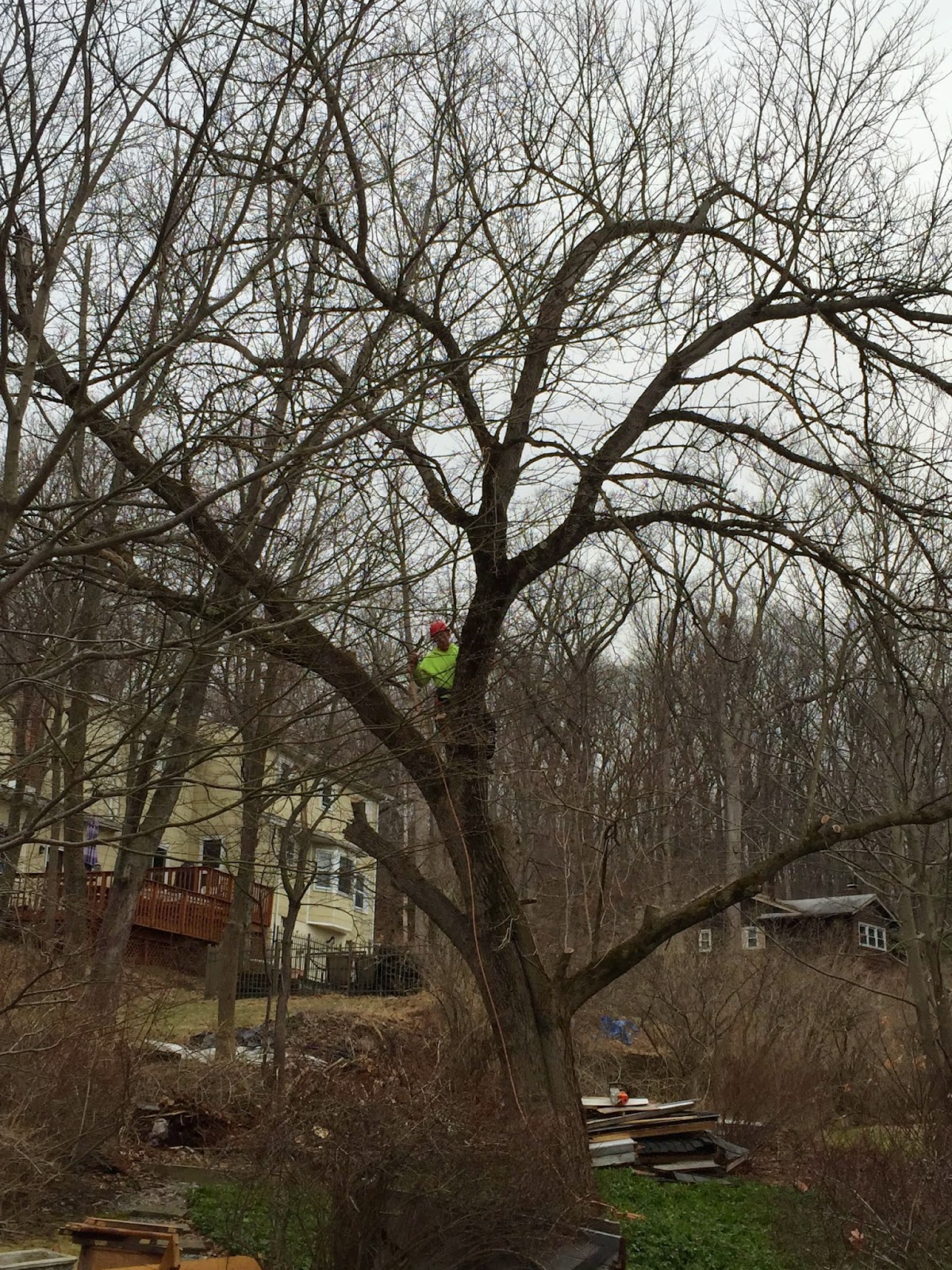
As the saying goes, "There is a time for every purpose under heaven," and the time to cut back mature trees is now. From the final weeks of winter into the first few weeks of spring (roughly mid-March-mid April), prune deciduous trees before they begin to leaf out. Some trees, such as maples, "bleed" heavily when pruned in late winter or early spring. However, the heavy bleeding doesn't harm the trees. The trees won't bleed to death and the flow of sap will gradually slow and stop.
Be careful when pruning oak trees. Cutting them after mid-April is dangerous because it can spread what is known as "oak wilt." Pruning oaks from mid-April to mid-July may attract sap beetles carrying the oak wilt fungus to the pruning cuts, and transmit the disease to healthy trees. In my opinion, the best time to prune oaks is late February through the first week or two of April (in the northeast. Don't prune after April 1st in the south). If possible, avoid pruning deciduous trees in the spring as they are leafing out. At this time, the tree's energy reserves are low and the bark "slips" or tears easily. Another poor time to prune is during leaf drop in the fall. An excellent time to prune coniferous trees, like spruce and fir is late winter to early spring, when they are still dormant. Spruce and fir possess side or lateral buds. The pruning cut should be just above a side bud or branch. Hold off on cutting back pines, which are best pruned in early June to early July. At this time, the new growth is in the "candle" stage. Pinching or snapping off one-half to two-thirds of the pine's candle reduces the annual growth. And unwanted lower branches on all evergreen trees can be removed in late winter. Last, but not least: fruit trees. The best time to prune them is late February to the first week or two of April. Fruit trees pruned in fall or early winter may be susceptible to winter injury. And, obviously, cutting off limbs in spring will reduce the amount of fruit yield.
The first few weeks in spring is an excellent time to shape hedges. Not only is it better for the shrubs, but it enables gardeners to "get in there" without trampling over tender perennials just emerging from the soil. Mature or neglected spring-flowering shrubs often require extensive pruning to rejuvenate or renew the plants. The best time to rejuvenate large, overgrown shrubs is late winter or early spring (mid-February to mid-April) before the plants begin to leaf out. While heavy pruning in late winter or early spring will reduce or eliminate the flower display for a season or so, the restoration of a healthy, vigorous shrub is more important.
If spring-flowering hedges (like forsythia) need only light pruning, cautiously cut them back immediately after blooming. This allows the gardener to enjoy the spring flower display, and gives the shrubs adequate time to initiate new flower buds for next season. Summer-flowering shrubs, such as potentilla and Japanese spirea and hydrangea (the white paniculata) bloom on the current year's growth. Prune these shrubs in late winter or early spring. Summer-flowering shrubs pruned from mid-February to early April will still bloom in summer. Many deciduous shrubs don't produce attractive flowers. These shrubs may possess attractive bark, fruit, or fall leaf color. Prune these shrubs in late winter or early spring also. Never prune deciduous shrubs in late summer. Pruning shrubs in August or early September may encourage a late flush of growth. This new growth may not harden sufficiently before the arrival of cold weather and be susceptible to winter injury. Evergreen hedges, such as juniper and yew, need snipping in late March through mid-April, before new growth begins. Light pruning may also be done in late June or early July. Avoid pruning evergreen shrubs in the fall. Fall pruned evergreens are more susceptible to winter injury. As for unwanted greenery, like that pesky moss which perennially pops up amid your grass blades, April is the month to pull out all the stops. These nonparasitic, primitive green plants reproduce by means of wind-blown spores. And April is the month that the spores kick into high gear. Mosses typically form a thick, green mat on the soil surface. They produce their own food and do not kill grass plants, but rather fill in the spaces in the lawn where grass is not growing.
If mosses are present in your lawn, it indicates that conditions are not favorable for the growth of a healthy stand of grass but are favorable for the growth of mosses. The conditions that favor mosses over grass include: excessive shade, acidic soil, poor drainage, compacted soil, excessive irrigation, low soil fertility or some combination of these conditions.
The most common cause of moss-growth is lack of light, but it won't be a problem going forward if diligent gardeners have trimmed back trees and hedges--steps one and two of my must-do plan. Now, all you need to do is step into your newly renovated, sunlight-filled yard with a box of baking soda. Sprinkle existing moss just before a rainstorm because water activates the baking soda, prompting its moss-kicking properties to shift into high gear. Wait until moss turns yellowish, then simply rake it out, and toss new seed onto sparse spaces just after Mother's Day to ensure tender seedlings grow thick and strong.
Thursday, April 2, 2015
April fowl's day
Okay, so yesterday was April 1st--April Fool's Day to us, but our feathered friends are never fooled. Each year, "snowbirds" trek back north to enjoy our cooler summer temps, and delight the rest of us in the process.
Without even knowing the date, I could tell Spring had officially arrived when I saw the first Robin hopping around the back lawn in search of a juicy worm or two. I thought about the fact that we see fewer Robins in winter because they are conscientiously less conspicuous (although some of them do migrate short distances). They gather into groups that prefer rural areas, or regions where there are few people, but available food.
In spring the Robins are more obvious because they are moving back into more populated areas. The flocks break up in an activity called " breeding dispersal." Robins are not community nesters. Each pair has it's own territory. This results in the Robins being more obvious to the casual observer because they are spread over a large area.
I had little time to ponder this as a raucous party of European Starlings demanded my attention. Perched together in their customary flocks, I followed their less-than-melodious calls to the treetops and witnessed nearly 50 of them congregating in the nearby oaks. Whipping out my camera, I was able to capture their silhouettes against the overcast sky. The effect, pictured above, is that of an abstract painting.
The only thing that distracted me from that ruckus was the jazzy honking coming from even higher up. Looking straight up into the sky, I spotted the Canada geese, flying in their telltale arrowhead formation. They may be the bane of every park groundskeeper's existence, but I always welcome them back. They are a harbinger of long days of light past 7 pm, soft seasonal breezes, fat raindrops and lush, flowering plants of all shapes and sizes. I smile as I watch them make their transitory trek across my little sliver of sky, thinking, Good to see you again, old friends.
Without even knowing the date, I could tell Spring had officially arrived when I saw the first Robin hopping around the back lawn in search of a juicy worm or two. I thought about the fact that we see fewer Robins in winter because they are conscientiously less conspicuous (although some of them do migrate short distances). They gather into groups that prefer rural areas, or regions where there are few people, but available food.
In spring the Robins are more obvious because they are moving back into more populated areas. The flocks break up in an activity called " breeding dispersal." Robins are not community nesters. Each pair has it's own territory. This results in the Robins being more obvious to the casual observer because they are spread over a large area.
I had little time to ponder this as a raucous party of European Starlings demanded my attention. Perched together in their customary flocks, I followed their less-than-melodious calls to the treetops and witnessed nearly 50 of them congregating in the nearby oaks. Whipping out my camera, I was able to capture their silhouettes against the overcast sky. The effect, pictured above, is that of an abstract painting.
The only thing that distracted me from that ruckus was the jazzy honking coming from even higher up. Looking straight up into the sky, I spotted the Canada geese, flying in their telltale arrowhead formation. They may be the bane of every park groundskeeper's existence, but I always welcome them back. They are a harbinger of long days of light past 7 pm, soft seasonal breezes, fat raindrops and lush, flowering plants of all shapes and sizes. I smile as I watch them make their transitory trek across my little sliver of sky, thinking, Good to see you again, old friends.
Thursday, March 26, 2015
Winged warriors
The next time your life seems difficult, think of the butterfly, and you're bound to feel blessed with your human form. I mean, really, we've got it good folks. Once we journey through the birth canal, our work is pretty much done--for an interminable 18 years--until we're urged out of our cozy cocoons. Even those of us who are forced out earlier, or are more than ready to spread our wings, are slow starters when compared with our fluttering friends, who've completely changed their life form before most of us sprout our first tooth. This lovely tribute to metamorphosis, posted on FanStory by Melissa Brown, sums up each butterfly's tough transformation:
Born just a worm, lowly and plain
crawled a caterpillar through rain
It started to eat and grow strong
for trials would find it before long.
Spinning thread inside a cocoon
to total darkness, not immune
All alone and starting to die
transformation the reason why.
The capsule shakes and starts to split
works its way out, it will not quit
Wings of beauty ready to fly
freed from prison and flying high.
Born like a worm, ugly and low
crawling around, life started slow
Growth would come and tried to be strong
Satan's darkness came before long.
Overwhelmed and wanting to die
God held onto me, He knew why
Transformed life was His perfect plan
Takes a lifetime to run the span
Free from pain and wanting to soar
Spread my wings like never before
Never look back and fly above
To the arms of my Father's love.
And that's just the beginning of their year of living dangerously. During those 12 fleeting months of precious life, butterflies encounter: extreme climate fluctuations, including heavy rain and freezing temperatures which kill thousands of them, and multiple predators, such as wasps, snakes, toads, frogs, birds, rats--even monkeys, ants and dragonflies.
Good news for the beloved orange and black Monarch butterfly: because it's young derive most nutrition from the milkweed plant, which most predators despise the taste of, the Monarch is less often on the menu. Bad news for the Monarch: deforestation, including widespread loss of the milkweed plant makes it harder to survive. This is, in turn, bad news for humans because Monarchs pollinate plants, including some that people rely on for food, such as corn.
The solution is simple: plant milkweed in your flower and vegetable gardens. The native Asclepias tuberosa (common name, Butterfly Weed), is a vibrant orange hue, offering a valuable shot of color to any garden. This plant is fragrant, drought-tolerant, and thrives in full sun, or even partially sunny areas. Don't mistake it with the also-lovely Butterfly Bush, whose graceful pannicles come in a multitude of pinks, purples, blues, and even white (Buddleia davidii). Although the latter attracts butterflies to the garden, it won't provide the life-sustaining nutrients of the milkweed plant. For this reason, use the Latin name at nurseries or when ordering online. I placed my order with the reasonably priced Four Season Nursery (4seasonnurseries.com).
One clever butterfly--the Viceroy--looks exactly like the Monarch to untrained observers (which is, I bet, most of us). This is not a chance happening. This clever critter mimics the appearance of its more-famous cousin in order to avoid predation. This is just one of nearly 20,000 species of butterflies in the world. They flit through the social spectrum of all continents except Antarctica, leaving delighted viewers in their wind-walking wake. Let's ensure their survival by planting milkweed and other butterfly attractors, like creeping thyme (Thymus p. 'Coccineus'), dill and fennel, which provide useful cooking spices--but discourage butterfly-chomping critters, who prefer their meals unseasoned.
Thursday, March 19, 2015
Mistletoe: friend or foe?
I catch up with my mother each week via long-distance phone call, since she winters near St. Augustine, Florida, and I'm toughing it out amid the harsh beauty of upstate New York. But Mother Nature throws each of us a curve every now and then, no matter what region we reside in.
During our most recent phone conversation, my mom lamented over the discovery of mistletoe in her oak tree. "My oak has not been growing well, and my gardener pointed out the mistletoe clinging to some of it's branches," came her worried tone. "Do you think the mistletoe is harming the oak?"
Being only familiar with the holiday-decorating aspects of the plant, I assured her I would do a little research, and find out. Here's what I discovered:
Mistletoe is a parasite. Uh oh, that doesn't sound good. Parasites are freeloaders, kind of like old Uncle Ed and Aunt Lil, who have a habit of appearing on your doorstep unannounced, and parking their bags in your spare bedroom before disclosing future plans to vacate the premises. Don't panic! Take a deep breath. Mistletoe may not have been invited, but, like Uncle Ed, it's a slow mover. And, on the positive side, with a scent like oranges, it likely smells a lot better than that old geezer.
But, also like your ancient houseguests, it can be hard to get rid of. A native of Europe and northern Asia, it has made the long journey to these parts, and it likes it enough here to settle in comfortably. It attaches itself to trees by a structure called haustorium (rather than roots in the soil) through which is absorbs nutrients and water from its host (a thick, juicy tree branch), and grows in a ball shape that remains green throughout cold-weather months (a telltale sign that it has taken up residence in your barren treetops). Large trees can support this uninvited guest, but smaller ones will suffer, so it's important to cut out the mistletoe, and a few select branches. Be careful when pruning though: if you clip more than a third of the branches, you will severely damage the tree. Thinned branches continue to grow and strengthen trees, but not if they're all hacked off!
For free, attractive holiday decorations, you can clip the mistletoe mass right out of the tree, and attach it to your front porch eaves with festive ribbon. A well-known Christmas-decorating staple, I think the attractive green foliage would add pizazz to St. Patrick's Day festivities as well. It would even welcome spring in a hale and hearty manner. Hanging it outside (35-48 degrees is best) will preserve it all season long, enabling anyone who stands under it to partake in the ritual of kissing beneath it. But beware, the ancients believed mistletoe held the gift of fertility. And based on the plant's tenacious growing habit, I'm inclined to agree.
*Photo courtesy of Wikipedia
Thursday, March 12, 2015
"What a Wonderful World"
For anyone who has followed my posts, there can be no doubt that I am devoted to my garden in upstate New York. Yet, every now and then it's good to venture out into the wider world to witness nature's wonders elsewhere. I recently took a trip to New Orleans, and was delighted by all that The Big Easy had to offer lil ole me.
In the famed French Quarter I had only to look heavenward to be rewarded with a celestial sight: flowers and foliage of every size, shape, and color arching over filigreed wrought-iron balconies. Floral cornucopia from the gods.
As we meandered down ancient streets to the jazzy strains of brass instruments and woodwinds, I had a difficult time keeping my eyes on the road in front of me. Only when my neck felt strained could I look away from the lushly layered buildings.
I was reminded of a trip I once took to Venice, Italy, a city similar to it's Louisiana cousin in its elevation above sea level--or lack of it (New Orleans' elevation is anywhere from 20 feet above, at it's highest point, to seven feet below at it's lowest. Venice is even further below sea level, and when it rains, expect your ankles to get saturated). Both Venice and New Orleans are slowly sinking. But that's not all they have in common. Like Venice, our Southern sister's natives can't dig more than two or three feet in the ground without the hole filling up with water, so the region's gardeners--like their European counterparts--have to get creative.
One thing they all keep in mind is to cover the area with plants that have super shallow root systems, like the beautiful azalea plants rimming every courtyard (above). Notice they are just starting to bloom. Other options include choosing vegetation that really enjoy getting their "feet" wet (like the bald cypress, saw palmetto and iris of the bayou, below, right. Check out that handsome great blue heron!). Most annuals (in both cities) get pedestalled (above, left).
And who, I ask you, wouldn't want to be placed in a position of such high regard in a city as unique and lovely as New Orleans?
Thursday, March 5, 2015
An unlikely stunner in the summer garden
It's always around this time of year, as we're rounding the bend on St. Patrick's Day, that my holiday poinsettias start looking droopy and sad. It's as if they know the festivities are far behind us, and they're about ready to give up the ghost of Christmas past (doesn't that line sound like a perfect "before and after" puzzle on Wheel of Fortune?).
Fortunately, my friend Marilyn from Wisconsin has shared a way for me to not only help raise the poor poinsettias' spirits, but keep them going all summer and into the fall, looking hale and hearty--in preparation for "show time" in December:
In February or early March--in other words, NOW--cut each of the old flowering stems on the plant back to 4 to 6 inches in height, leaving one to three leaves on each of the old branches. New growth comes from buds located in the leaf axils. Cutting the plant back will cause the buds to grow and develop. Keep the plant in a sunny window at a temperature of 60 to 70 degrees F, and water regularly, letting the soil just begin to dry out before dousing it once more. If bottom leaves wither and drop, the plant is not getting enough water. If they turn yellow, then drop, you are overwatering. Fertilize as needed every 2 weeks.
In late spring, well after the final frost has lifted, and evening temperatures no longer dip lower than 60 degrees F, plant poinsettias right in the ground (but here's a tip: make it easy on yourself--and the plant's tender roots--by planting the entire pot in the ground). Peat moss and vermiculite/perlite potting soils sold at garden centers are satisfactory, and easy to use. If you want to prepare your own growing medium, use 2 parts sterilized garden soil, 1 part peat moss and 1 part sand vermiculite, or perlite plus (which I prefer because I think it's better at attracting and sustaining water), and mix thoroughly. Planting tip: choose a well-drained, slightly shaded spot outdoors. Remember that the plant may need to be watered more frequently than the rest of your garden. And since poinsettias are famous for being finicky, don't place them in windy spots. They prefer to settle in a quiet place. And since they're homebodies, place them near your foundation for protection--as well as a ready-made display case for their red, white or rosy bracts.
By mid-September, bring your poinsettia plant indoors at night to avoid chilling injury (this occurs when temperatures are below 45 degrees F for an extended period). The poinsettia can be placed back outdoors in the daytime when temperatures are warm enough, or keep it in a sunny window. Fertilize every 2 weeks. To reflower your poinsettia, you must keep the plant in complete darkness between 5 p.m. and 8 a.m. daily from the end of September until color shows in the bracts (early to mid-December). The temperature should remain between 60 and 70 degrees F. Night temperatures above 70 to 75 degrees F may delay or prevent flowering. If you follow this procedure the poinsettia will be in full bloom by Christmas.
Subscribe to:
Posts (Atom)